“Can I get layers?” is one of the most common requests at any salon — and one of the vaguest. Layers are not one haircut. The distance between each layer changes everything about how your hair looks, moves, and behaves. Long layers and short layers can look like completely different haircuts on the same head of hair.
So what is the actual difference, and which one should you ask for? Here is a straight comparison — what each type does, who it suits, how much upkeep it needs, and exactly what to say to your stylist.
What Are Long Layers?
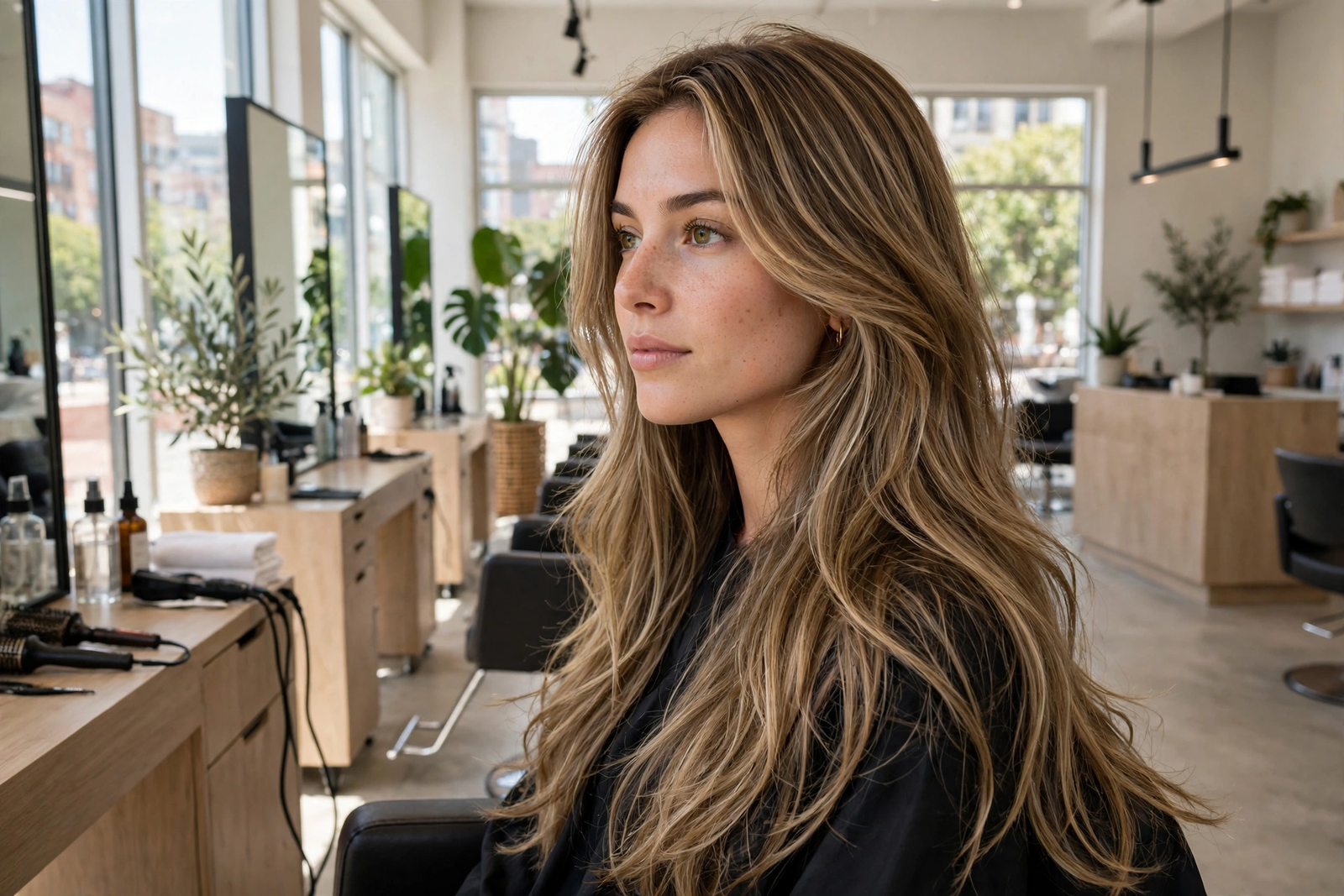
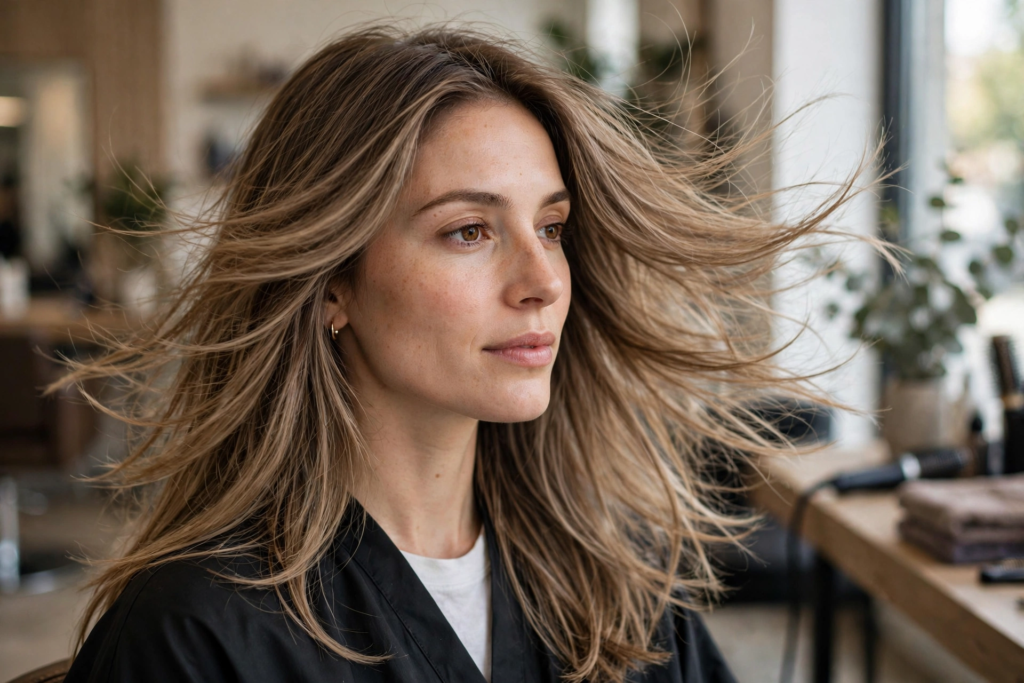
Long layers are cut with more length between each layer. The shortest layer and the longest layer are not that far apart, so the layers blend into each other smoothly. The result is subtle: your hair keeps its overall length and shape, but gains softness, movement, and a lighter feel through the ends.
Think of long layers as a refinement of your current length rather than a transformation. From a distance, the haircut can look almost one-length — the layers reveal themselves when your hair moves. They work on medium to long hair; hair that is too short usually does not have enough length for the layers to blend gracefully.
Long layers are ideal if you: want to keep your length, have thick or heavy hair that needs weight removed, prefer a natural and soft look, or want a cut that grows out gracefully with minimal salon visits.
What Are Short Layers?
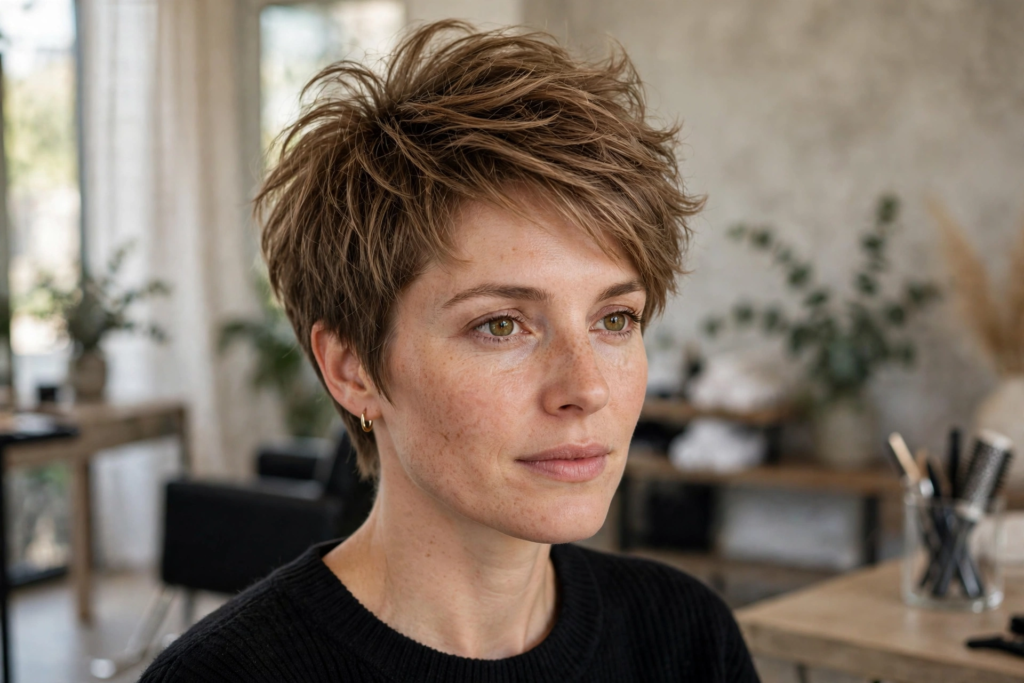
Short layers are cut with less space between each layer. The steps between layers are more noticeable, which creates visible texture, separation, and volume. Where long layers whisper, short layers speak clearly — the layering is meant to be seen.
Short layers lift the hair, especially at the crown, and make each section move independently. That is why they add so much body: the shorter pieces push the longer pieces up and out. They work on almost any hair length, including short cuts — a pixie cut is essentially all short layers.
Short layers are ideal if you: want visible texture and volume, have fine or flat hair that needs lift, love bold and piece-y styles, or wear shorter haircuts that need shape built in.
Long Layers vs Short Layers: Side-by-Side Comparison
| Long Layers | Short Layers | |
|---|---|---|
| Layer spacing | More length between layers | Less space between layers |
| Overall look | Subtle, smooth, flowing | Textured, piece-y, voluminous |
| Volume effect | Reduces bulk in thick hair | Adds body and lift, great for fine hair |
| Best hair lengths | Medium to long | Short, medium, or long |
| Maintenance | Lower — trims every 8–12 weeks | Higher — trims every 4–6 weeks |
| Grow-out | Graceful, keeps its shape | Loses definition faster as it grows |
| Styling effort | Easy — air-dries well, soft waves | More styling to define the pieces |
| Face-framing | Gentle, blended framing | Stronger, more dramatic framing |
Which Layers Suit Your Hair Type?
Your natural texture matters more than any trend photo. Here is the honest breakdown:
- Thick, heavy hair: Long layers. They remove weight and bulk without sacrificing length, and they stop the dreaded triangle shape where hair goes wide at the bottom. Short layers on very thick hair can add volume you do not need.
- Fine or thin hair: Short layers. Closely spaced layers create the illusion of fullness — the shorter pieces lift the rest. But do not go overboard: too many short layers on very fine hair can make the ends look thin and wispy.
- Wavy hair: Either works. Long layers enhance the natural wave pattern with movement; short layers make waves springier and more defined. Pick based on how much volume you want.
- Curly hair: Usually long layers. Short layers on curls can create a rounded, overly voluminous shape because each layer springs up independently. Long layers keep the weight that pulls curls into a flattering shape.
- Straight hair: Short layers add the texture and movement that straight hair lacks; long layers keep it sleek with just a hint of shape. Both are valid — it comes down to the look you want.
Face shape plays a role too. Longer, blended layers soften angular faces and add the illusion of length to round faces. Shorter, piece-y layers around the face create angles and definition. Mention your face shape to your stylist — a good one factors it in automatically.
Maintenance: How Often Will You Need a Trim?
This is where the two really diverge, and it is the question most people forget to ask.
Short layers need a trim every 4–6 weeks. Because the shape depends on precise spacing between layers, even half an inch of growth softens the definition. Skip your appointments and the cut quickly turns shaggy rather than textured.
Long layers are far more forgiving — every 8–12 weeks is usually enough. The blended shape holds together as it grows, and many people stretch it further with just a dusting of the ends. If you are low-maintenance or on a budget, this alone can decide it for you.
Styling effort follows the same pattern. Long layers air-dry into soft waves with minimal work. Short layers look their best with a little daily styling — a round brush, some texturizing spray, or a quick pass with a flat iron to define the pieces.
How to Ask Your Stylist for the Layers You Want
“Layers” alone tells your stylist almost nothing. Walk in with specifics:
- Name the type: “I want long, blended layers” or “I want short, textured layers with volume.”
- Show where the shortest layer should hit: Point to your own hair — “shortest layer at the chin,” or “no shorter than the collarbone.” This one detail prevents most layer disasters.
- Bring photos of hair with a similar texture to yours, from the front and side.
- Say what you want to keep: “I want to keep all my length” or “I’m fine losing two inches for more shape.”
- Mention your routine: “I air-dry my hair” or “I heat-style daily.” Your stylist will cut differently for each.
The shortest-layer question is the one that matters most. Too many layer regrets come down to the shortest piece being cut higher than expected. Say the boundary out loud before the scissors come out.
The Bottom Line
There is no universally better option — only the better option for your hair and your life. Choose long layers if you want to keep length, tame thick hair, and visit the salon less often. Choose short layers if you want visible texture, need volume, and do not mind regular trims. And if you are choosing a whole new cut around your layers, our guides to the classic bob (long-layer territory) and the pixie cut (short-layer territory) show how each layering style plays out in a real haircut.
FAQ
Can I get long layers on short hair?
Not really — long layers need enough length for the layers to blend smoothly. On short hair there simply is not enough distance between the shortest and longest layer for the effect to work. Short hair suits short layers, which build shape and texture into the cut.
Do layers damage your hair?
Layers themselves do not damage hair — they are just a cutting technique. But short layers expose more ends and need more heat styling to look defined, which can add up over time. Long layers are gentler in practice because they need less daily styling. Either way, regular trims keep ends healthy.
Which type of layers adds the most volume?
Short layers, without question. The closely spaced layers push hair up and out, creating lift at the crown and separation through the lengths. That is why short layers are the standard recommendation for fine or flat hair that needs body.
Are long or short layers better for a round face?
Long layers are usually the safer pick for round faces — the vertical lines of blended layers add the illusion of length. If you prefer short layers, ask your stylist to keep the face-framing pieces longer (below the chin) so they elongate rather than widen the face.