Few haircuts have survived a century of trends as gracefully as the bob. It is sharp without being severe, feminine without being fussy, and it works in a boardroom as well as it does on a weekend. Whether you are considering your first big chop or just want to understand your options before your next salon visit, this guide covers the classic bob: its story, its styles, and how to wear it well.
What Is a Classic Bob?
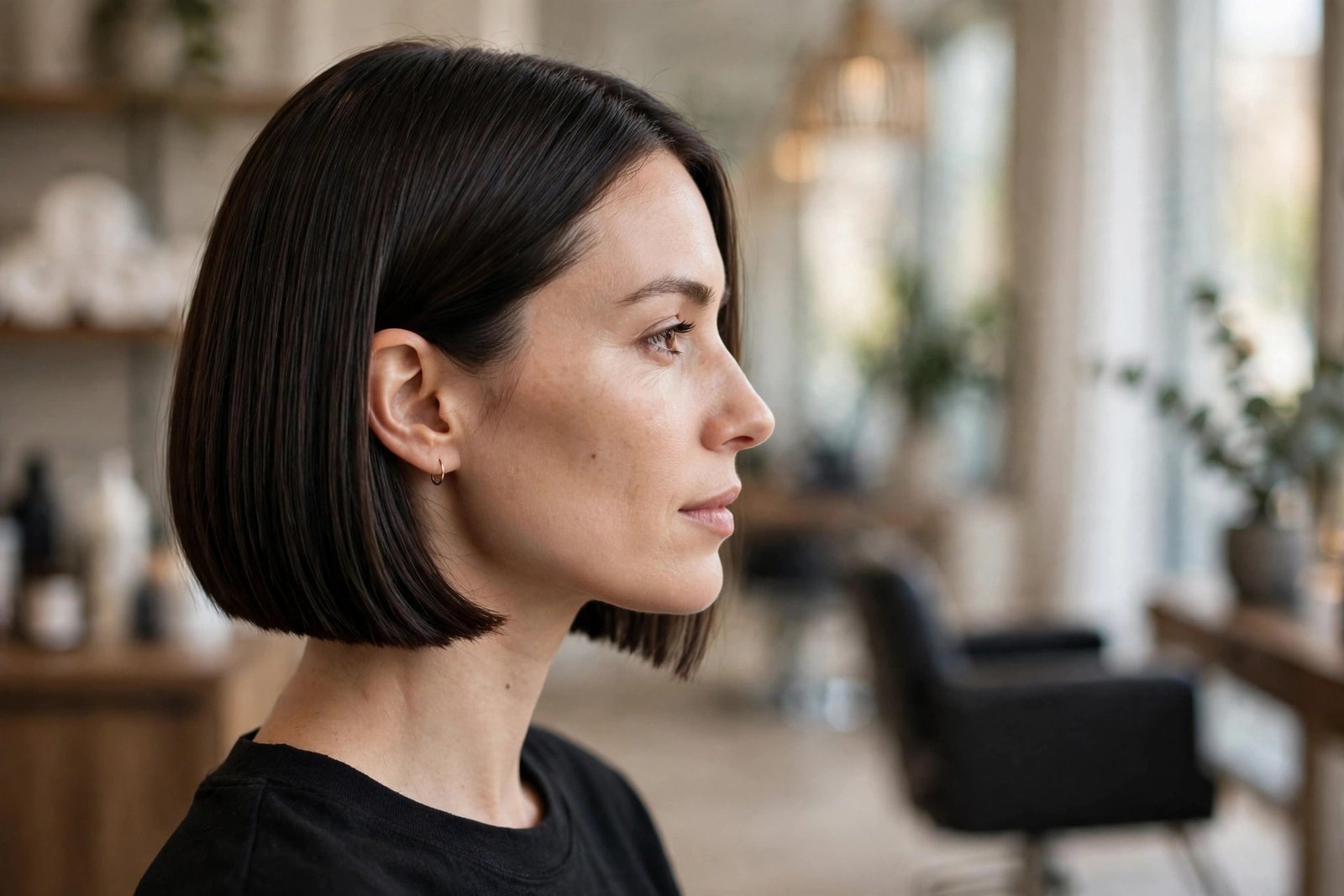
The classic bob is a blunt, one-length cut that usually sits right at the jawline. No layers, no graduation — just a clean, horizontal line all the way around. It is chic, polished, and surprisingly versatile: the same cut can look sleek and sharp or soft and undone depending on how you style it. Think of it as the foundation — every other bob variation is a twist on this shape.
A Short History of the Bob
The bob became a cultural statement in the 1920s, when short hair became a symbol of independence for the post-war generation. Flapper-era women abandoned long, restrictive styles, and dancers like Louise Brooks made the bob the defining look of the decade. Its next great moment came in 1963, when hairstylist Vidal Sassoon created the geometric five-point bob — short, precise, and architectural — worn by fashion designer Mary Quant and model Twiggy. A century later, the bob is still being reinvented every season, which tells you everything about its staying power.
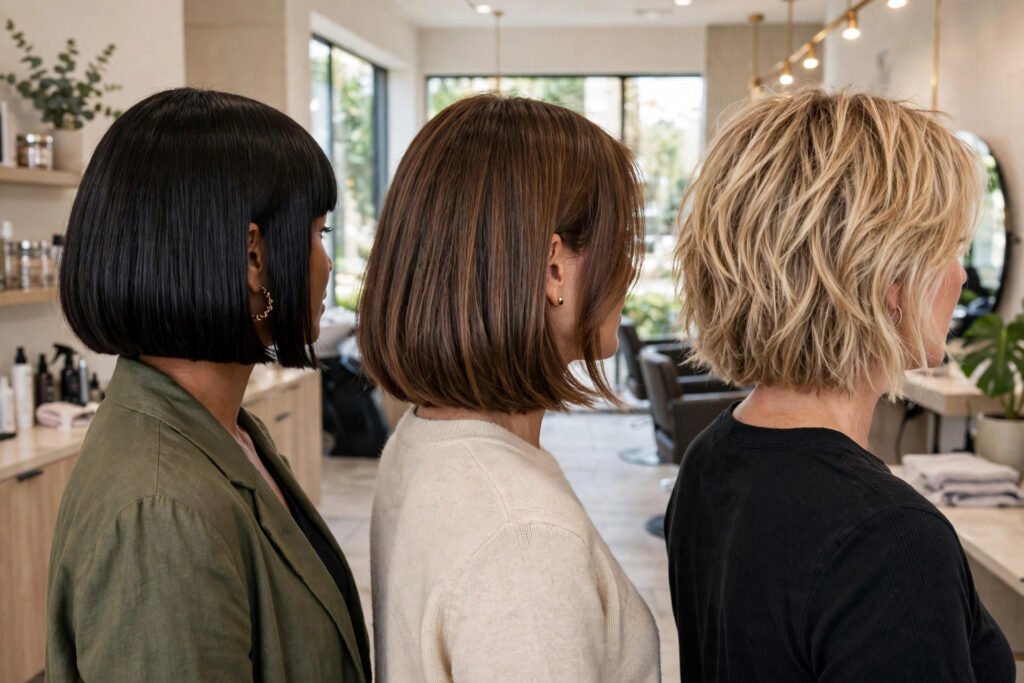
5 Bob Styles to Know
1. The Classic (Blunt) Bob
One length, jawline-grazing, razor-sharp ends. Best for straight or slightly wavy hair, and the lowest-maintenance of the polished styles — though the blunt line means trims matter.
2. The A-Line Bob
Shorter in the back, gradually longer toward the front. The diagonal line gives it a modern, angular edge and works beautifully to elongate the neck.
3. The Graduated (Stacked) Bob
Stacked layers at the nape create a rounded, voluminous shape at the back. Great for adding body, especially on finer hair — but it needs blow-drying to keep its shape.
4. The Layered Bob
Soft layers throughout for movement and texture. The most forgiving option: it suits most hair types, grows out gracefully, and can make thin hair look fuller.
5. The Lob (Long Bob)
Falling between the chin and the collarbone, the lob is the bob for the commitment-shy. It keeps styling versatility — ponytails still work — while delivering the bob look.
Which Bob Suits Your Face Shape?
The right bob is mostly about balance:
- Round face: go longer — a lob or an A-line adds length and slims the cheeks. Avoid chin-length blunt cuts that end at the widest point of the face.
- Oval face: the lucky ones — almost every bob works. A classic jawline bob shows off balanced proportions.
- Square face: soften a strong jawline with a longer bob or soft layers around the face. Blunt cuts ending right at the jaw can emphasize angularity.
- Heart-shaped face: chin-length bobs and soft, face-framing layers balance a wider forehead with a narrower chin.
- Long face: a chin-length bob with some width (or bangs) shortens the appearance of the face.
When in doubt, bring reference photos of bobs on people with a similar face shape — your stylist can translate the picture to your hair.
How to Style a Bob
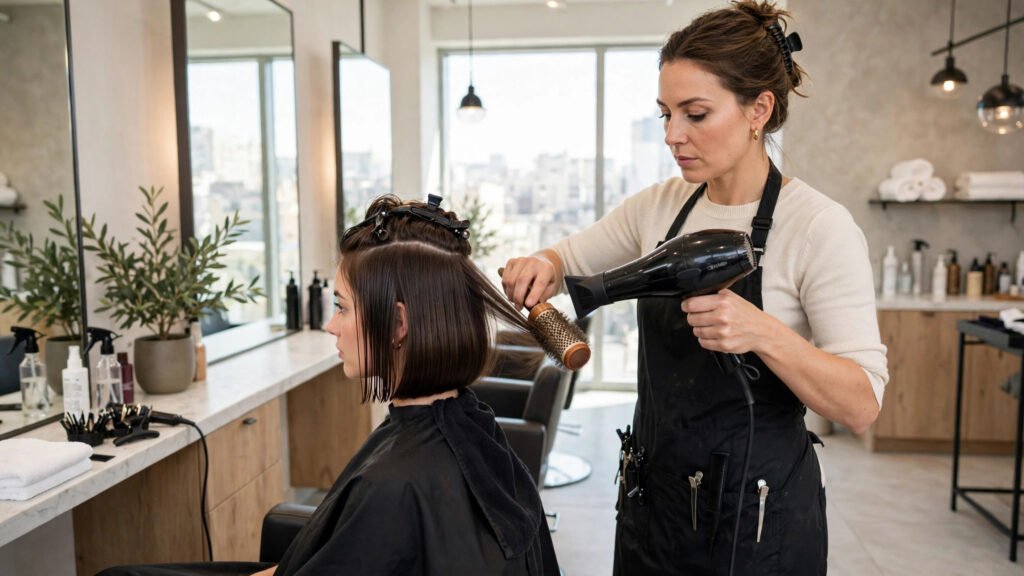
A bob rewards ten minutes of effort in the morning. Two go-to routines:
- Sleek and polished: apply a smoothing serum to damp hair, blow-dry with a round brush, then run a flat iron through the ends. Finish with a light shine spray. Total: 10 to 15 minutes.
- Textured and undone: work a texturizing spray through dry hair, add a few bends with a flat iron, and shake it out. Air-drying works too — the cut does most of the work. Total: about 5 minutes.
For second-day hair, a little dry shampoo at the roots revives volume without a full wash. Keep the ends hydrated with a leave-in cream or hair oil — on a blunt cut, dry ends are the first thing people notice.
Maintenance: Trims Every 6 to 8 Weeks
Here is the trade-off nobody mentions: a bob is easier to style daily than long hair, but it demands more frequent salon visits. To keep the line sharp and the shape intentional, plan on a trim every 6 to 8 weeks — you cannot stretch it to 12 like you can with longer hair. The appointment is usually quick, since it’s a shape refresh rather than a full restyle.
Frequently Asked Questions
Does a bob haircut suit thin hair?
Yes — in fact, a bob is one of the best cuts for thin hair. A blunt, one-length bob makes ends look thicker and fuller than layered long hair does. Ask your stylist to keep the perimeter strong and avoid over-thinning, which can make fine hair look sparser.
What is the difference between a classic bob and an A-line bob?
A classic bob is all one length with a horizontal line. An A-line bob is shorter at the back and angles longer toward the front, creating a diagonal silhouette. The A-line looks more modern and elongates the neck; the classic looks more timeless and graphic.
Can I get a bob if I have curly hair?
Absolutely, but leave extra length — curls shrink when dry, so a bob cut to chin-length wet may spring up much shorter. Ask for a dry cut or for the stylist to account for shrinkage, and consider a layered or longer bob shape that works with your curl pattern rather than against it.
How do I grow out a bob without the awkward phase?
Grow it in stages: bob to lob to shoulder length, with a trim every 8 to 10 weeks to reshape rather than shorten. Layers help the transition look intentional. It takes patience, but regular shaping trims keep every stage looking like a choice, not an accident.