They look similar in a photo. Both keep the sides short, both look clean from the front, and both work with almost any top. But a low taper fade and a drop fade are built on different ideas — and once you sit in the chair, the difference is hard to miss.
The short version: a low taper fade is softer, calmer, and easier to live with. A drop fade is sharper, bolder, and built to stand out. Which one is right for you depends on your face shape, your hair type, and how often you want to see your barber.
What Is a Low Taper Fade?
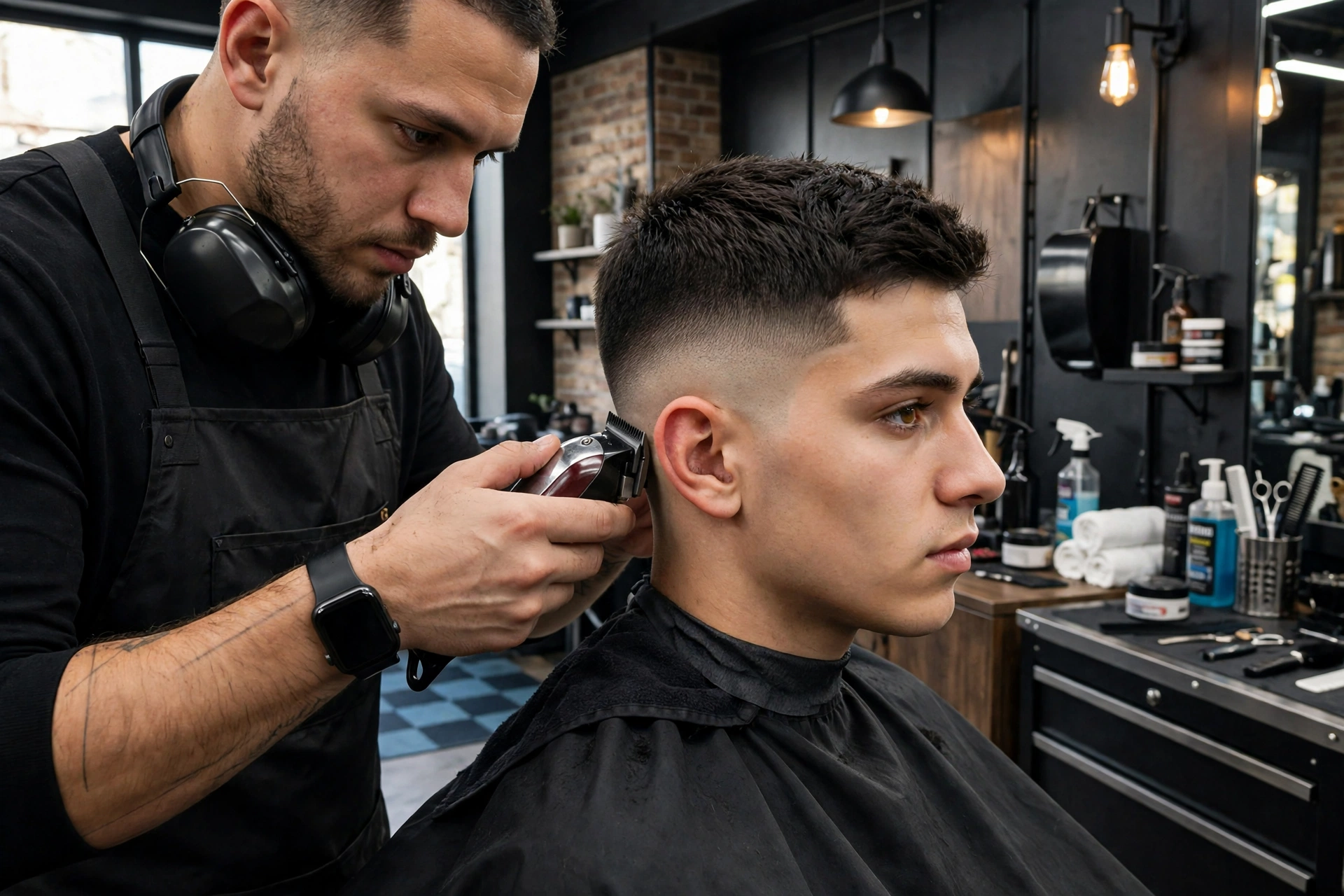
A low taper fade starts just above the ears and around the nape of the neck. The hair gets gradually shorter as it moves down toward the hairline, but the blend stays low and the transition is gentle. The fade line runs fairly straight around the back of the head, following your natural hairline.
The result is subtle by design. Many people will not even recognize it as a fade — it just looks like very clean, well-managed sides. It works with nearly every top style, from a crew cut to a quiff, and it suits almost every face shape because it does not change the outline of your head very much. If you are weighing fade heights, our low taper fade vs high taper fade comparison breaks down the other end of the scale.
What Is a Drop Fade?
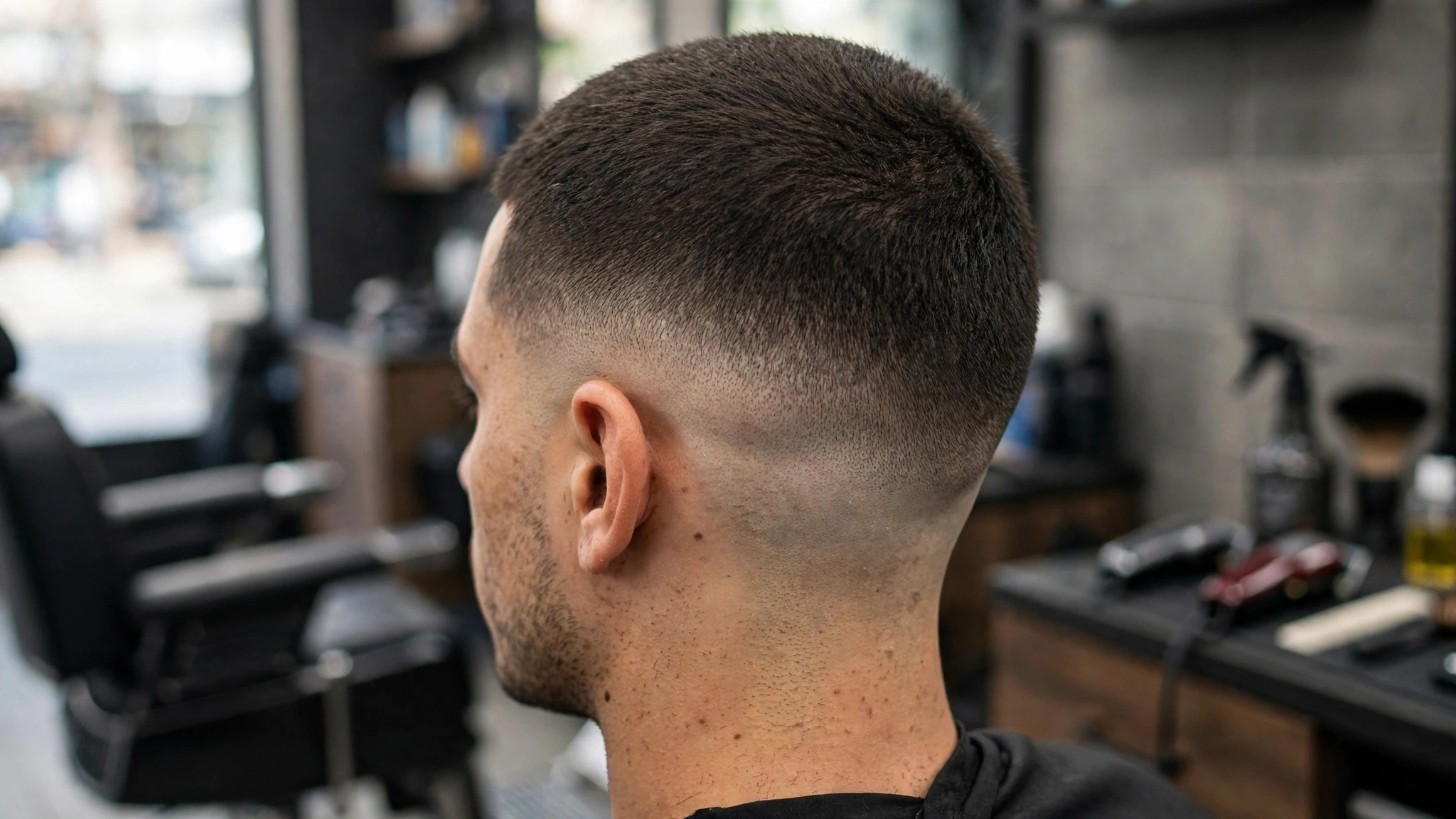
A drop fade starts at a similar height near the temples, but then the fade line curves — it “drops” downward behind the ear instead of running straight across. The line dips lower as it moves toward the back of the head, creating a visible arc.
That curve is the whole point of the cut. It gives the haircut more shape and structure when viewed from the side and back, and it creates a sharper outline than a low taper. A drop fade usually has a more compressed, higher-contrast blend, so the transition from short to long is more obvious.
The drop fade is a more modern, fashion-forward cut. It shows off barber skill — getting that curved line even on both sides takes a steady hand — and it reads as a deliberate style choice rather than a safe default.
The Key Differences at a Glance
Fade line: Low taper fade — straight, follows the hairline around the back. Drop fade — curves and drops down behind the ear. Contrast: Low taper fade — low and soft, gradual blend. Drop fade — medium to high, sharper transition. Best for: Low taper fade — almost all face shapes. Drop fade — oval and round faces; flat back-of-head profiles. Maintenance: Low taper fade — every 3–4 weeks. Drop fade — every 1–2 weeks (low drop fade: 2–3 weeks). Professional look: Low taper fade — very office-friendly. Drop fade — clean but more noticeable and modern. Barber skill needed: Low taper fade — moderate, most barbers do it well. Drop fade — higher, the curved line must be even on both sides. Grow-out: Low taper fade — graceful, still looks decent for weeks. Drop fade — loses its sharp curve fast as hair grows. Typical US price: Low taper fade — about $25–$40. Drop fade — about $35–$60.
Prices are approximate and vary by city and barbershop — expect higher prices in major metros and lower prices at neighborhood shops.
The Fade Line: The Biggest Difference
If you only remember one difference, make it the fade line.
A low taper keeps its line horizontal. It wraps around the head at roughly the same height, just above the ear, and follows the natural contour. Nothing about it calls attention to itself.
A drop fade breaks that line on purpose. It starts near the temple, then arcs downward behind the ear before reaching the nape. From the side, you can see the curve clearly. From the back, the fade dips lower in the middle. That arc adds shape to the head — it can even make a flat back-of-head profile look rounder.
Which Face Shapes Suit Each Cut?
Low taper fade: suits nearly everyone. Because it does not change the head’s outline much, it works on round, square, oval, long, and heart-shaped faces. It is the safe choice if you are unsure.
Drop fade: works best on oval and round faces, where the curved line adds length and structure. For the round-face version of this cut, see our guide to the best low taper fade for a round face. It also suits men with a flat back-of-head profile, since the arc creates the illusion of a rounder shape from behind. Men with a very round or protruding back of the head should be careful — the drop can over-emphasize that shape.
Maintenance and Upkeep
This is where the two cuts separate most in real life.
A low taper fade is the easiest fade to maintain. The gradual blend hides regrowth, so you can stretch 3 to 4 weeks between cuts and still look decent. It is the cut to pick if you want to look sharp without living at the barbershop.
A drop fade is the opposite. The curved line is the whole look, and it loses definition fast once hair starts growing back. Most men need a touch-up every 1 to 2 weeks to keep the arc crisp. A low drop fade — a drop fade placed lower on the head — holds up a little better, about 2 to 3 weeks, but it still needs more attention than a low taper.
If your schedule is tight, that difference alone may decide it for you.
Cost in the US
A low taper fade at a typical US barbershop runs about $25–$40. A drop fade usually costs more — about $35–$60 — because it takes more time and more skill to cut the curved line evenly. Prices are approximate and vary by city; expect the higher end in New York, Los Angeles, and other major metros.
Tipping etiquette is the same for both: 15–20% is standard in the US, and 20% or more is common for a cut you are happy with.
Which One Works With a Beard?
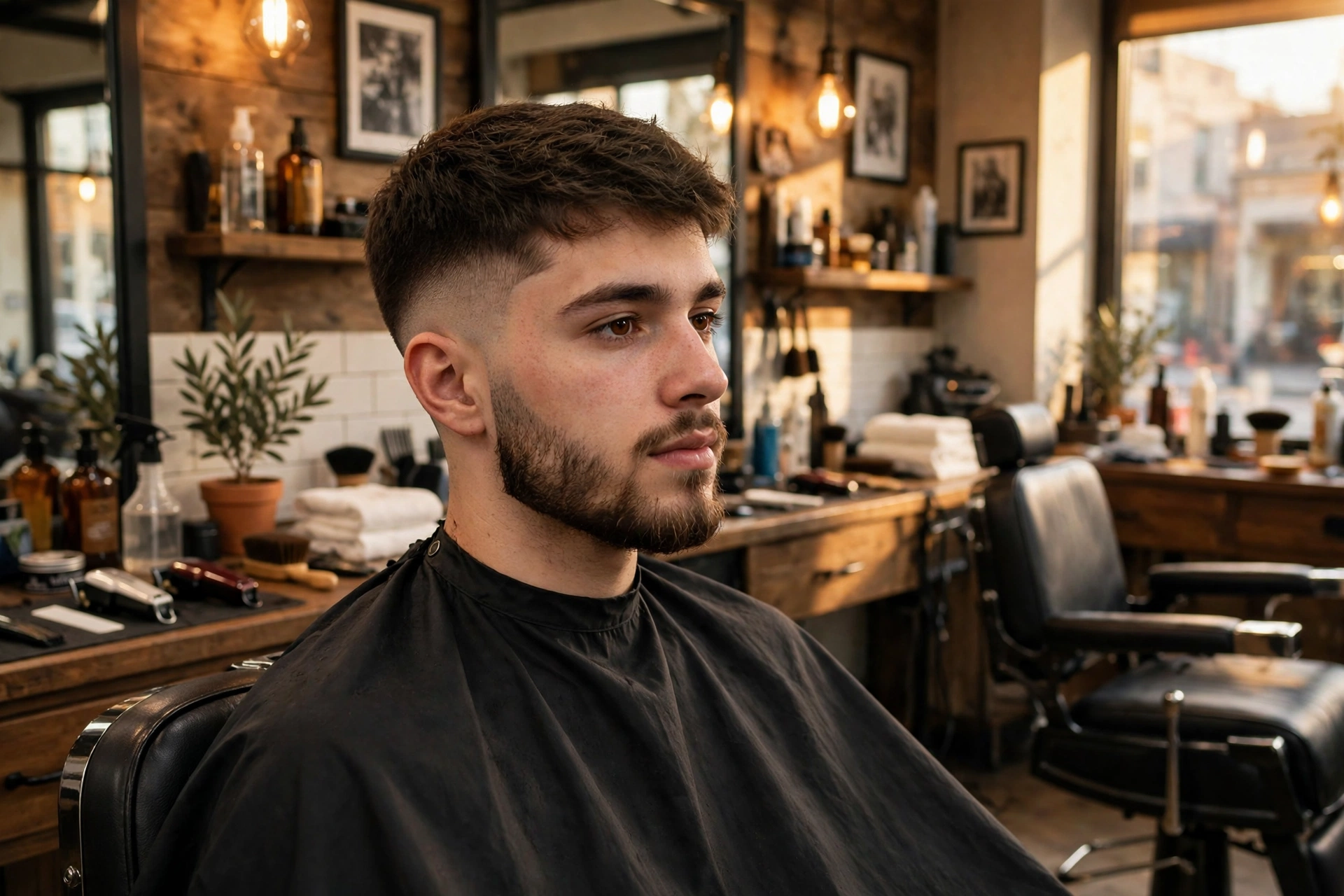
A low taper blends into a beard more naturally. The fade stays soft near the sideburns, so the transition from hair to beard looks smooth and connected.
A drop fade creates a stronger break between the haircut and the beard, because the curved fade line cuts across the sideburn area. That can look great if you want a bold, defined look — but it needs a barber who can blend the beard into the curve cleanly. For the full technique, see how barbers blend a beard into a low taper fade. If you wear a full beard, tell your barber before the cut starts so they can plan the blend.
Which One Should You Choose?
Go with a low taper fade if: You want a clean, professional look that works everywhere. You prefer lower maintenance and fewer barber visits. You like classic haircuts that grow out well. You are trying a fade for the first time.
Go with a drop fade if: You want a sharper, more modern look that stands out. You like strong contrast and visible shape. You have curly, coily, or thick wavy hair, where the curved line anchors the style. You do not mind a barber visit every 1 to 2 weeks.
Neither cut is always better. The best one is the style that still suits you after a few weeks — not just on the day you leave the chair.
What to Tell Your Barber
For a low taper fade, say: “Low taper fade. Keep it as gradual as possible — I want to see hair all the way down. Just clean up the sideburns and neckline and let the blend happen naturally.”
For a drop fade, say: “Drop fade. Keep the fade line low at the temples, about an inch above the ear, but let it arc down and drop as it goes around the back. I want the curve to sit below the occipital bone.”
Bringing a reference photo helps with either cut — but it matters even more for a drop fade, since the exact shape of the curve is a matter of taste.
FAQ
Is a drop fade the same as a low taper fade?
No. A low taper fade keeps a straight, low fade line around the head with a soft blend. A drop fade curves the fade line downward behind the ear, creating a visible arc and a sharper, more structured look.
Which one lasts longer between cuts?
A low taper fade lasts longer — usually 3 to 4 weeks. A drop fade needs a touch-up every 1 to 2 weeks to keep the curved line crisp, since regrowth blurs the arc quickly.
Can I get a drop fade with straight hair?
Yes, but the curve shows up best on textured hair — curly, coily, or thick wavy hair. On straight hair, ask for a low drop fade, which keeps the arc subtle and easier to maintain.
Which fade is more professional for work?
The low taper fade. It is softer, more understated, and reads as polished in any office. A drop fade can still look clean, but its stronger shape draws more attention.