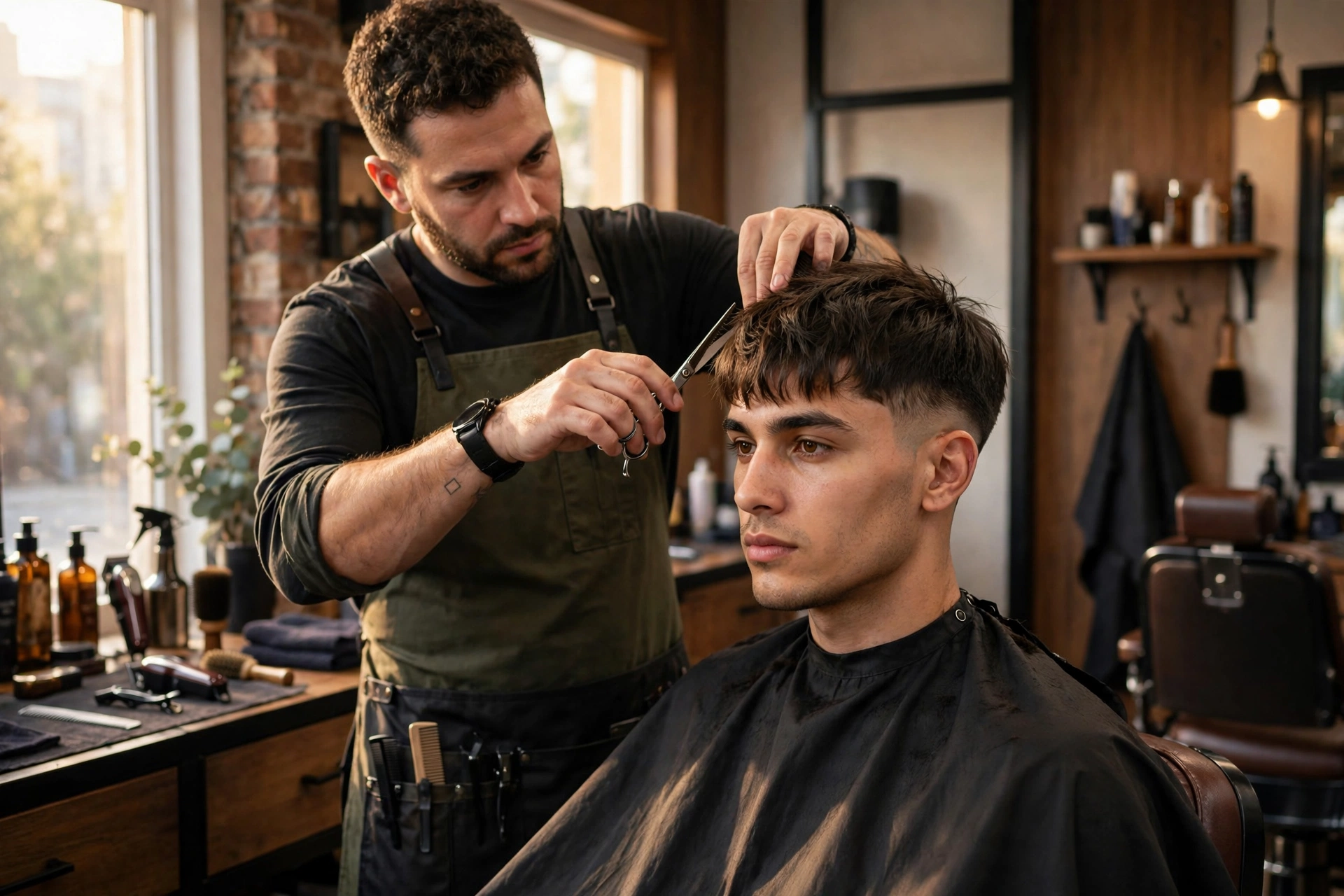
A diamond face has strong cheekbones, a narrower forehead, and a narrower, sometimes pointed chin. It is a striking shape — but the wrong haircut can make the cheekbones look even wider and the forehead even narrower. The low taper fade diamond face combination works because it keeps hair where the face needs width and keeps the sharp detail low, around the ears and neckline.
This guide explains how the shape works, which low taper fade styles soften it, which styles to avoid, and exactly what to say to your barber.
What Is a Diamond Face?
A diamond face is widest at the cheekbones. Above them, the forehead narrows toward the temples; below them, the jaw narrows toward the chin. If you run your fingers from your temples to your cheekbones and the cheekbones stick out furthest, you likely have a diamond face.
The balancing goal is the opposite of a round face: instead of adding height, you add width at the forehead and a little fullness at the jaw, while softening the cheekbones. The idea is not to hide your cheekbones — they are a good feature — but to let the forehead and jaw catch up so the whole face reads as balanced. Our guide to the oval face shows the other end of the spectrum: an oval face needs almost no balancing at all.
Why the Low Taper Fade Works for a Diamond Face
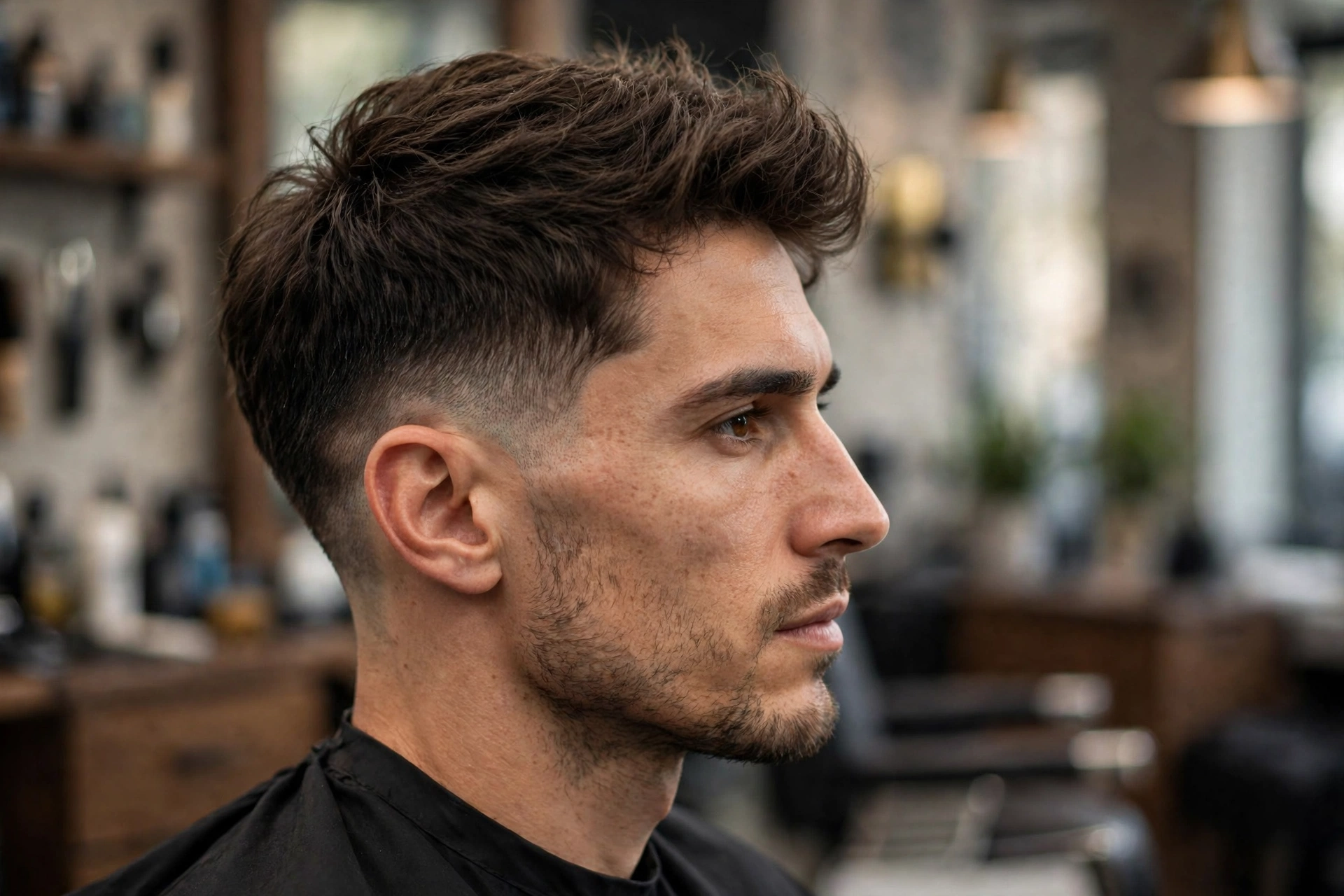
The low taper fade is one of the safest choices for a diamond face for one simple reason: it leaves hair at the temples. A high skin fade shaves the sides bare right at cheekbone height, which removes the only hair beside the widest point of the face — and makes the cheekbones look wider still. A low taper keeps the sides fuller through the temple area, so the outline of the head stays smooth and the cheekbones stop dominating the silhouette.
The taper itself is still clean and sharp, but it happens low — around the ears and the nape — where it tidies the cut without changing the shape of the face.
5 Low Taper Fade Styles That Flatter a Diamond Face
1. Textured Fringe
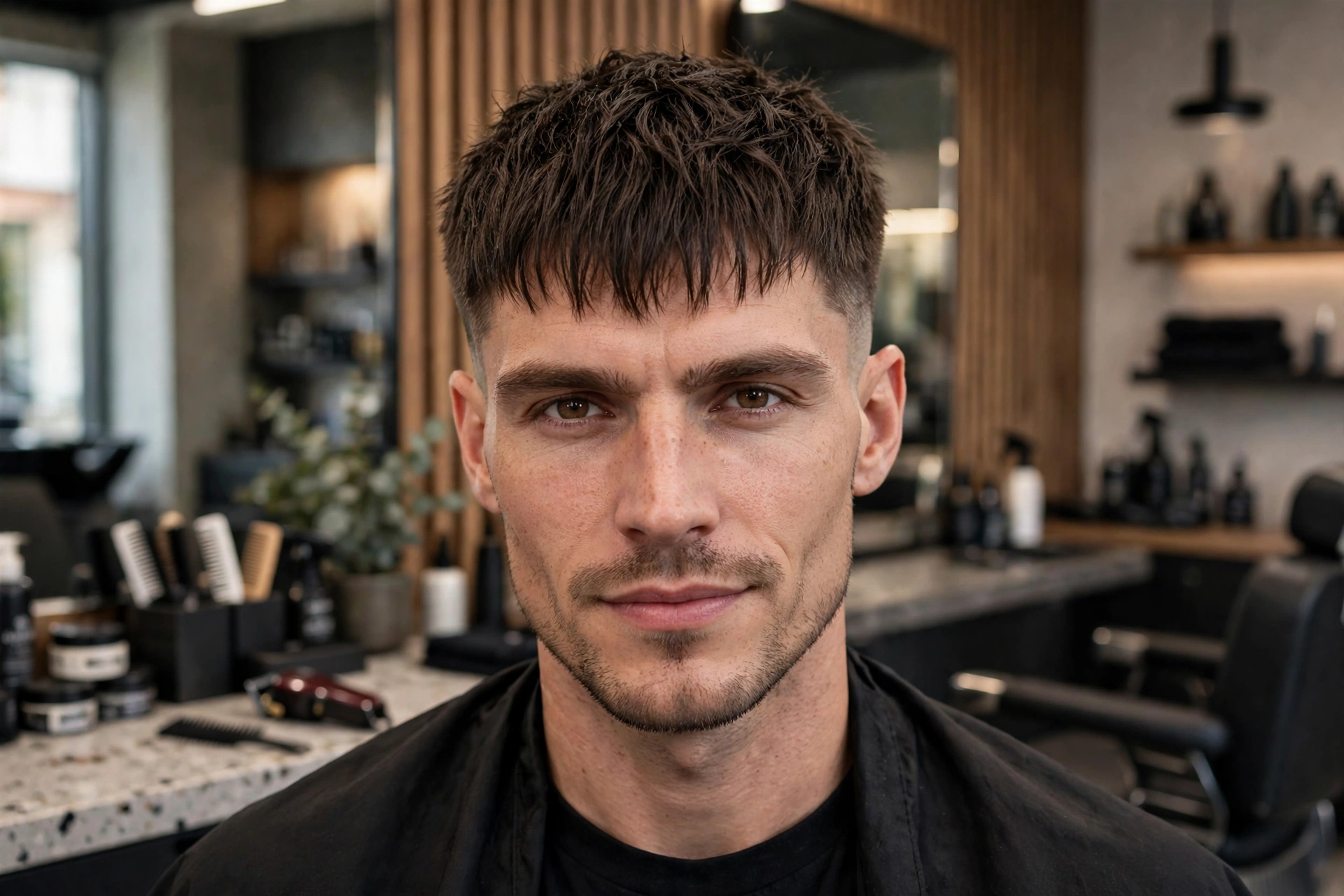
The most reliable choice. Keep 2 to 4 inches on top, textured and pushed forward over the forehead. The fringe fills in the narrow upper third of the face and adds width exactly where the diamond is narrowest. Keep the texture choppy rather than flat — a flat fringe removes the softness the shape needs. Our textured fringe guide covers the styling in detail.
2. Classic Side Part
A side part creates a diagonal line across the forehead, which breaks up the vertical length of the face and adds width to one side. Keep 3 to 5 inches on top so there is enough length to sweep, with low-tapered sides. A soft, natural part looks more modern than a hard shaved-in line — and a hard part adds another sharp angle to an already angular face.
3. Curly or Wavy Top
Natural curls and waves are a built-in advantage for a diamond face, because texture creates width on its own. Keep 2 to 4 inches on top with the curls falling forward, paired with a low taper. Our curly fringe guide shows how the same idea works with a shorter front.
4. Messy Textured Crop
A short crop with choppy, uneven texture on top softens the angular lines of the face. The messy finish reads as width, while a rigid, sculpted style just repeats the sharp angles. Use a matte clay and work it through with your fingers — do not comb it flat.
5. Buzz Cut With a Low Taper
A buzz can work, but only with a low taper — never a high skin fade. A #1 or #2 guard all over with the taper kept low at the base keeps the sides full enough to stop the cheekbones from dominating. It is a bold, honest cut for a diamond face, and it works best if your cheekbones are not extremely wide.
Styles to Avoid on a Diamond Face
- High skin fades. They expose the temples and make the cheekbones the widest, most exposed point of the whole head.
- Slicked-back hair with height. Pulling everything back and up exposes the narrow forehead and turns the face into a tall column.
- Very short buzz with a high fade. With nothing to soften it, a buzz shows your bone structure at full strength.
- Hard parts and sharp line-ups at the temples. A razor-sharp squared temple draws attention to the narrow forehead. Keep the lineup soft at the temple corners.
Pair It With a Beard to Balance the Jaw
A diamond face is narrow at the jaw, so facial hair can help. A short boxed beard or a full beard that fills in at the jaw and stays neat at the cheeks adds width exactly where the face is narrow. Keep the cheek line natural rather than razor sharp, and blend the beard into the taper so there is no hard gap between the two. Our guide on a low taper fade with a full beard explains the blending technique barbers use.
What to Tell Your Barber
Use this script so nothing gets lost:
“I want a low taper fade — keep the taper low, and leave some length at the temples so my cheekbones do not stick out. On top, 2 to 4 inches with texture, pushed forward or to the side. I have a diamond face shape, so I want width at the forehead, not height.”
If your barber reaches for the clippers to take the sides high, stop them — many barbers default to a mid or high fade, so naming the height out loud matters.
Styling and Upkeep
Matte products suit a diamond face better than high-shine pomade — matte texture softens angular features, while shine sharpens them. A clay or paste, worked through damp hair with your fingers, is enough for most of these styles. The taper needs a touch-up every 2 to 3 weeks, and the top can go 4 to 5 weeks. In the US, a low taper fade typically costs around $25 to $45 at a barbershop, and a tip of 15 to 20 percent is standard.
FAQ
Does a low taper fade suit a diamond face?
Yes. It is one of the best options because it keeps hair at the temples, which balances the wide cheekbones, while keeping the edges clean low down.
What haircut is best for a diamond face?
A textured fringe or a classic side part with a low taper. Both add width at the forehead, which is the narrow part of a diamond face.
Should men with a diamond face avoid fades?
No — just avoid high skin fades. A low taper or a soft low fade keeps the sides full enough to balance the cheekbones.
Does a beard help a diamond face?
Yes. A beard that fills in at the jaw adds width where the face is narrow, and blending it into the taper keeps the whole look connected.