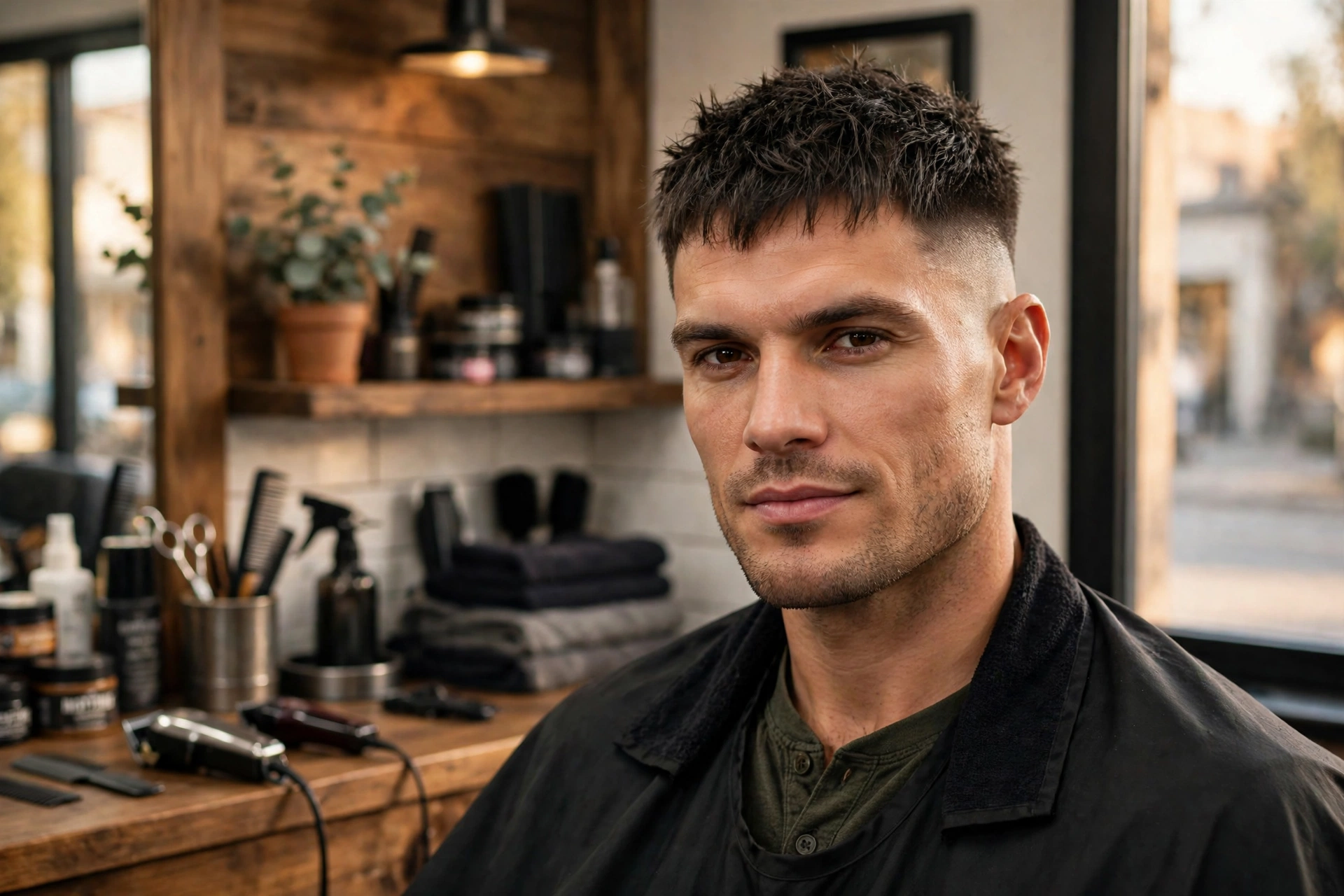
A square face is one of the strongest face shapes a man can have: a broad forehead, a wide jaw, and sharp angles. The question is not whether a low taper fade works on a square face — it does — but whether you want to soften those angles or show them off. The low taper fade lets you do either, and that is what makes it the best default fade for this face shape.
This guide covers how to spot a square face, the best low taper styles for it, the two routes you can take with your jawline, and the exact words to use in the barber’s chair.
How to Tell If Your Face Is Square
A square face is about as long as it is wide. Your forehead, cheekbones, and jaw are roughly the same width, and your jawline has clear, sharp corners. Your chin is flat rather than pointed or rounded. If your face looks strong and angular in the mirror, with a jawline you can trace in straight lines, you are most likely square.
The key decision for square faces is simple: soften or sharpen. Softening means texture on top, a little length at the sides, and a fringe that breaks up the forehead. Sharpening means close sides, a crisp part, and clean lines that put the jaw on show. Both look good. Pick the one that fits your style.
Why the Low Taper Fade Works on a Square Face
The low taper fade starts low around the ears and neckline, which keeps some length on the upper sides. That length softens the width of your forehead and temples, so your jaw does not look wider than everything else. At the same time, the clean edges at the bottom keep the whole cut sharp and intentional.
Compare that with a high skin fade: it strips the sides bare and puts all the attention on your jaw, which can make a square face look boxy. The low taper gives you control. It is the fade that does the balancing work for you. If you want the full contrast breakdown, see our low taper fade vs high taper fade guide.
The Best Low Taper Fade Styles for a Square Face
1. Textured Crop With a Low Taper (Best for Softening)
This is the most requested cut for square faces right now, and for good reason. Choppy, point-cut texture on top breaks up the hard lines of your face, and a forward fringe shortens a wide forehead just enough to shift the proportions. Ask for: “Textured crop, low taper fade, keep the fringe heavy and choppy so I can wear it forward.” Style it with a fingertip of matte clay, pushed roughly forward. It should look like you barely tried.
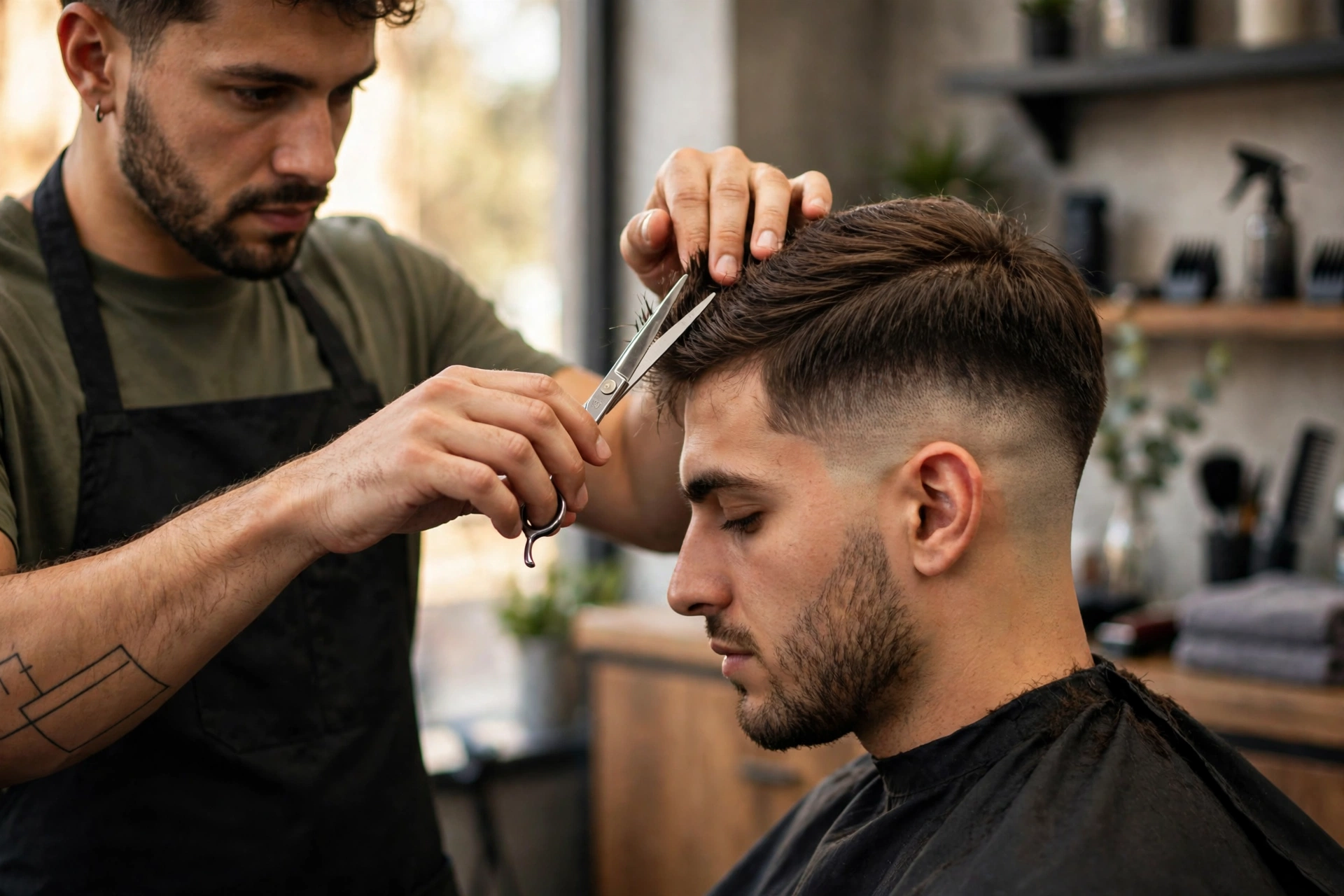
2. Low Taper Fade With a Middle Part (Best for Balance)
A center part divides the top evenly and softens the jawline while keeping the whole cut clean. Ask for a low taper fade with three to four inches on top, parted down the middle. Use a lightweight cream and blow dry each side away from the part. This works best on straight, wavy, or fine hair, and it suits both casual and professional settings. Our low taper fade with a middle part guide covers the curtain style in full.
3. Classic Side Part With a Low Taper (Best for Sharpening)
If you want to lean into your angles, the side part is your cut. A crisp, defined part with two to three inches on top adds structure and draws the eye upward. Ask for a low taper fade, a #1 at the shortest, and a sharp side part. Style it with a light pomade and a comb for a polished finish. This is a strong choice for the office, weddings, and job interviews. For an even crisper line, the low taper fade with a hard part adds a shaved part line.
4. Low Taper Fade With a Textured Fringe
The textured fringe is the softer cousin of the crop: the fringe sits on the forehead, the top has movement, and the low taper keeps the sides slim. It softens the forehead and the jaw at the same time, which makes it one of the most flattering options for a square face. Ask your barber to keep the fringe choppy and uneven rather than straight across. Our low taper fade with a textured fringe guide explains how to wear it.
5. Buzz Cut With a Low Taper (Best for Showing the Jaw)
A buzz cut on a square face is the most honest haircut there is: no hair to hide behind, all jaw. The version that works best is a #3 on top faded down to a #1 at the sides. That small contrast slims the head just enough while keeping the military cleanness. Ask for exactly that: “Three on top, fade the sides to a one.” Add a short beard faded into the taper for an even stronger silhouette. See our low taper fade with a buzz cut guide for the full breakdown.
6. Low Taper Fade With a Pompadour (Best for Height)
A pompadour adds height, which pulls attention upward and balances a wide jaw. Keep three to four inches at the front, sweep it up and back with a blow dryer, and finish with a medium-hold pomade. The height changes your face’s apparent proportions, so this is a good pick if your square face is on the shorter side.
Beard Pairings for a Square Face
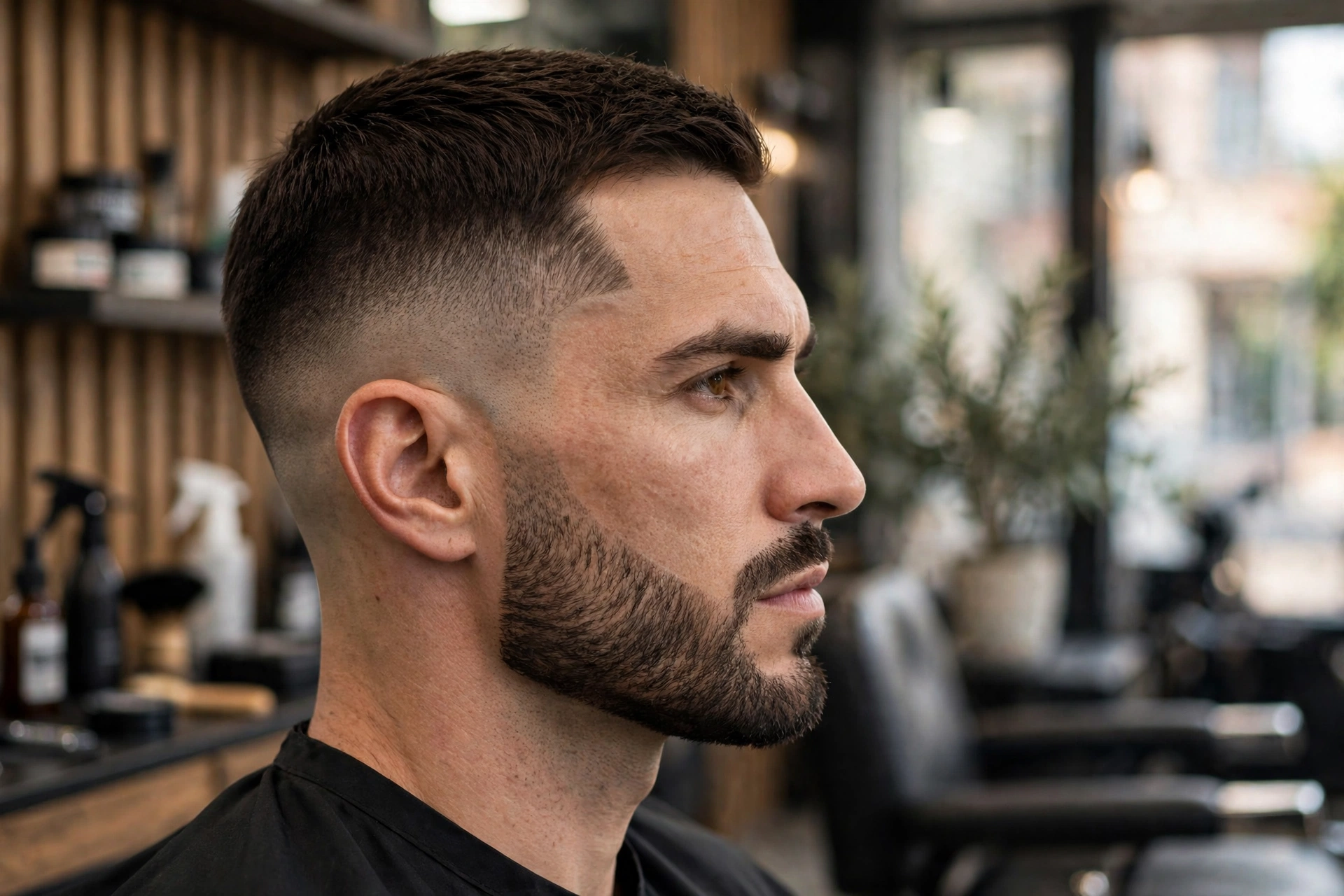
A beard can make or break a square-face cut. A short boxed beard, about 6 to 12 millimeters with a clean cheek line, keeps the jaw looking strong without adding extra width. Ask your barber to blend the sideburn into the beard so the taper and the beard read as one shape. If you want to soften the jaw, keep the beard a little longer at the chin and shorter at the cheeks. If you want to sharpen it, keep the cheek line crisp and the neckline clean.
What to Avoid on a Square Face
Avoid stacking hard angles on top of hard angles. A flat top with a sharp lineup and a high skin fade can make a square face look like a box. If you like sharp lines, balance them with some texture or height on top. Also avoid a very short buzz with no taper: without the fade, the sides add width at the temples and the jaw looks wider than it is.
What to Tell Your Barber
Bring a photo of the style you want. If you do not have one, use this script: “Low taper fade, #1 at the shortest, keep the top textured and about two to three inches, soft blend at the sides.” Then say which route you want: “I want to soften the angles” or “I want to keep the jaw sharp.” That one sentence tells your barber more than any style name will.
Styling and Maintenance
Most square-face low tapers are easy to style. A textured crop takes about a minute with matte clay. A side part or pompadour takes five to ten minutes with a blow dryer. Book a touch-up every two to three weeks to keep the taper and the edges sharp — the cleaner the lines, the stronger the jaw looks. A typical low taper fade in the US costs about $25 to $45 at a standard barbershop, more in big cities, and a tip of 15 to 20 percent is standard.
FAQ
Does a low taper fade suit a square face?
Yes. The low taper fade is one of the best fades for a square face because it keeps some length on the sides, which softens the width of the forehead, while the clean edges keep the jaw looking strong.
Should I soften or sharpen my square jawline?
Both work. Soften it with a textured crop, a fringe, or a middle part if you want a more relaxed look. Sharpen it with a crisp side part, a buzz cut, or a clean lineup if you want the jaw to be the headline.
What is the best low taper fade for a square face?
The textured crop with a low taper is the most popular and most flattering choice. The choppy top breaks up the hard angles, the fringe shortens the forehead, and the taper slims the sides.
Does a beard help a square face with a low taper?
Yes, when it is blended well. A short boxed beard faded into the taper strengthens the jawline and makes the whole cut look intentional. Ask your barber to blend the sideburn into the beard.
Final Word
A square face gives you an advantage most face shapes do not have: a strong jawline that a good cut can either soften or show off. The low taper fade is the right fade for both routes. Pick your route, show your barber a photo, and use the script above. Your jawline will do the rest.